
Spiti food, and what to eat in Spiti
The short answer
Spiti’s food is built on barley and what keeps through a six-month winter. Eat thukpa (noodle soup), momos, tsampa (roasted barley flour) and salty butter tea, and try dishes made with black peas, dried vegetables and dried meat. Most dishes are mild and filling, and vegetarian versions are easy to find in Kaza.
What grows here
Spiti has one growing season, from about May to September, and everything else has to keep through the winter. Barley has always been the staple, with black peas; in the last few decades many families have moved to green peas, which sell well in the plains. Potatoes, radish, cabbage and other vegetables grow in summer gardens, and seabuckthorn bushes grow wild along the rivers.
Cows are rare at this height, so butter, cheese and milk traditionally came from yaks and their crosses.
Dishes to try
| Dish | What it is |
|---|---|
| Thukpa | Noodle soup with vegetables or meat; thenthuk has flat, hand-pulled noodles |
| Momos | Steamed dumplings, filled with vegetables, cheese or meat |
| Tsampa | Roasted barley flour, mixed with butter tea into a dough or cooked into porridge |
| Butter tea | Tea churned with butter and salt: salty, rich and warming |
| Thinduk-chinduk | Crushed barley and black peas, cooked with apricot oil |
| Chiltas | Barley pancakes |
| Dried meat | Goat or sheep, dried in autumn for the winter |
| Chhang | Home-brewed barley beer, for festivals and guests |
The names change from village to village and from family to family, so ask what you are eating. People enjoy telling you.
Butter tea, honestly
Butter tea is drunk all day in Spiti homes, and you will be offered it. It is made by churning tea with butter and salt, and in some homes a little tsampa. If you are expecting sweet chai, the first sip is a surprise. Think of it as a thin, hot soup: in a house at −20 °C, it makes sense very quickly. Saying yes to one cup is polite; you can say no to the refill.
Food for the winter
From October, families store food for the six months of winter: barley and tsampa, potatoes and radishes, vegetables dried or fermented, and meat dried in the cold. Each house has its own store room for it. If you come in winter (see Spiti in winter), this is what you will eat in a homestay, and it is good: thick soups, barley, dumplings and lots of tea.
Where to eat
- Kaza has the valley’s cafés and restaurants, most of them open in summer. In winter you mostly eat what your host cooks, which is usually the best food in the valley.
- Homestays in the villages cook for their guests, and this is where you are most likely to eat real Spitian food.
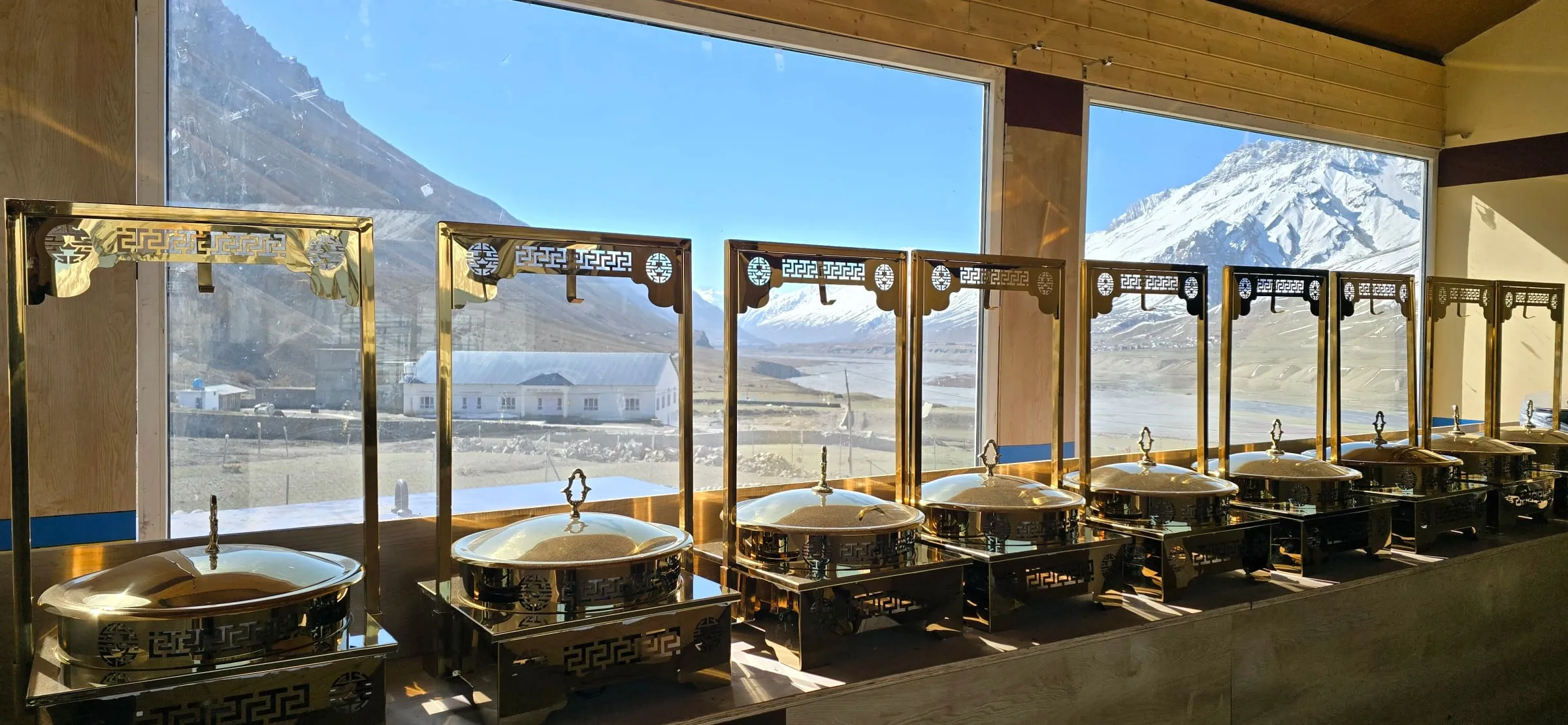
- At Spiti Villa, the glass-walled restaurant serves home-cooked Spitian and multi-cuisine food made from local ingredients. Ask the kitchen what is cooking that day.
Good to know
- Drink plenty of water. The air is dry, and you lose more water than you notice at altitude.
- Go easy on alcohol for the first two nights. Chhang and arak are strong, and altitude makes them stronger.
- Snacks: carry nuts, chocolate and biscuits for long drives; shops are few outside Kaza.
- Plastic: take your wrappers back to Kaza or home with you.
Quick answers
What is the famous food of Spiti?
Thukpa, a noodle soup with vegetables or meat, and momos, steamed dumplings. The local staples behind them are tsampa (roasted barley flour), butter tea and dishes of barley and black peas.
Is vegetarian food available in Spiti?
Yes. Thukpa, momos, dal and rice are all easy to find vegetarian in Kaza and in homestays. Meat-eating families dry goat or sheep meat for the winter.
What is butter tea?
Tea churned with butter and salt, drunk across the Tibetan Himalaya. It is salty, rich and warming, more like a soup than a sweet chai. Try it once, ideally in someone’s kitchen.
What do people in Spiti eat in winter?
Food stored in autumn: barley and tsampa, dried and fermented vegetables, dried meat and cheese. Fresh produce travels a long way to reach the valley in winter, so menus follow what the road has brought.
Sources
- Dried, fermented and boiled: the soul and survival food of Spiti, Outlook India, 28 April 2022, updated 18 January 2024
- Tsampa, Wikipedia, read 20 November 2026
- Thukpa, Wikipedia, read 20 November 2026
- Butter tea, Wikipedia, read 20 November 2026
- Spiti: agriculture, crops and plants (including seabuckthorn), Wikipedia, read 20 November 2026
Trips that fit
Run by Himalayan Brothers, our family’s travel company, and quoted on WhatsApp.
From our door
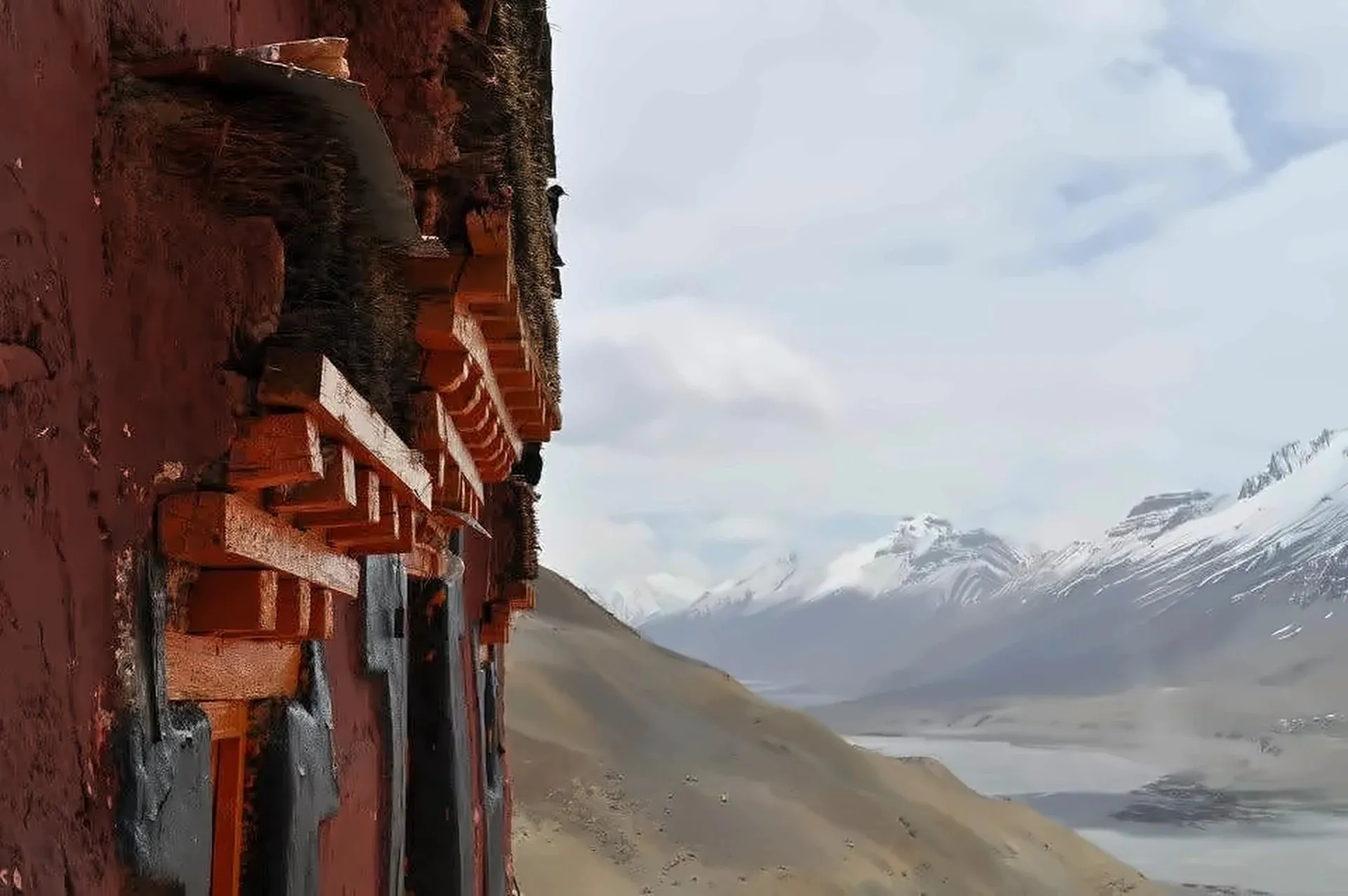
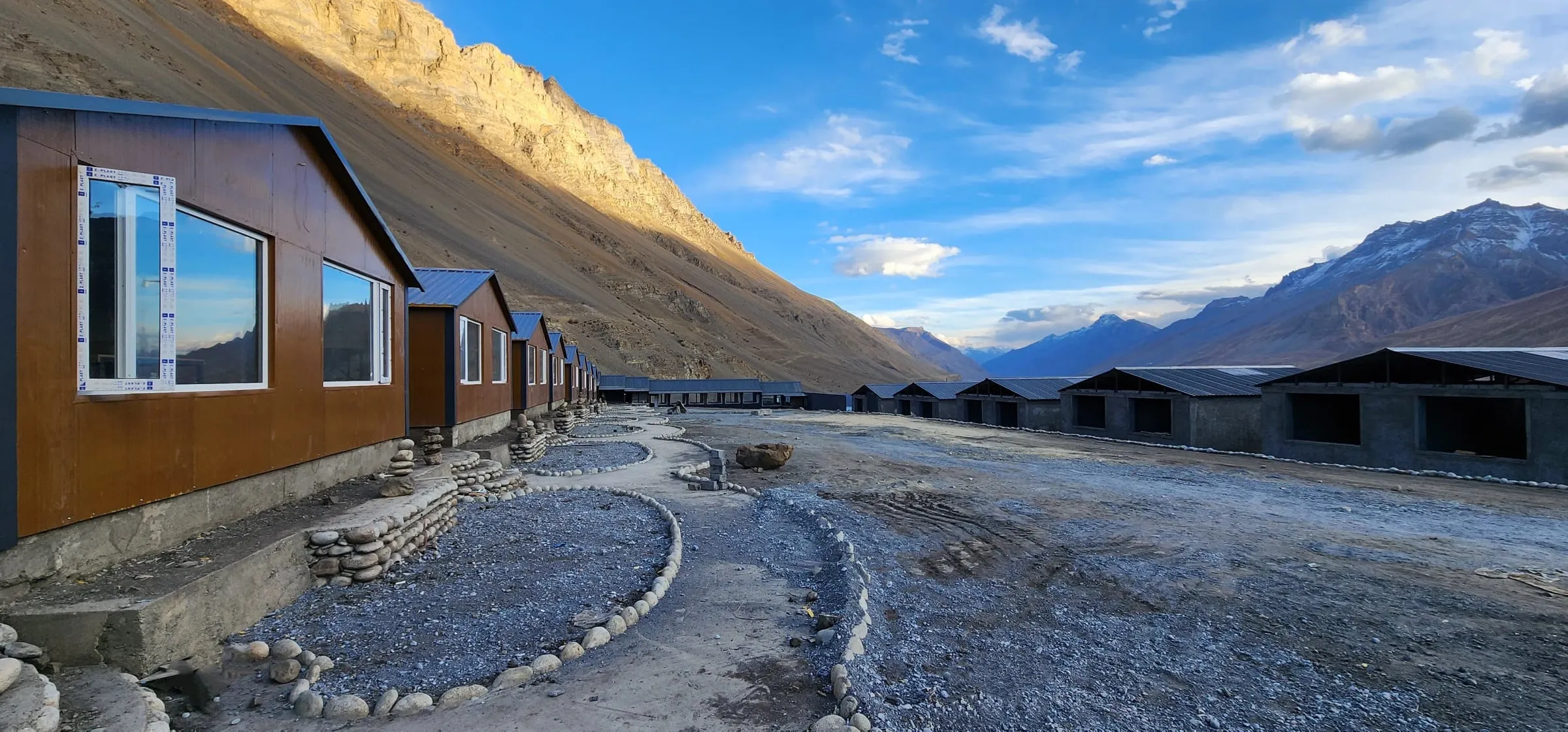
Spiti Villa is on Kibber Village Road, just below Key Monastery and 12 km from Kaza: 32 rooms, a glass-walled restaurant, and oxygen on site if the altitude catches up with you. Open all year.