
Snow leopards in Spiti

The short answer
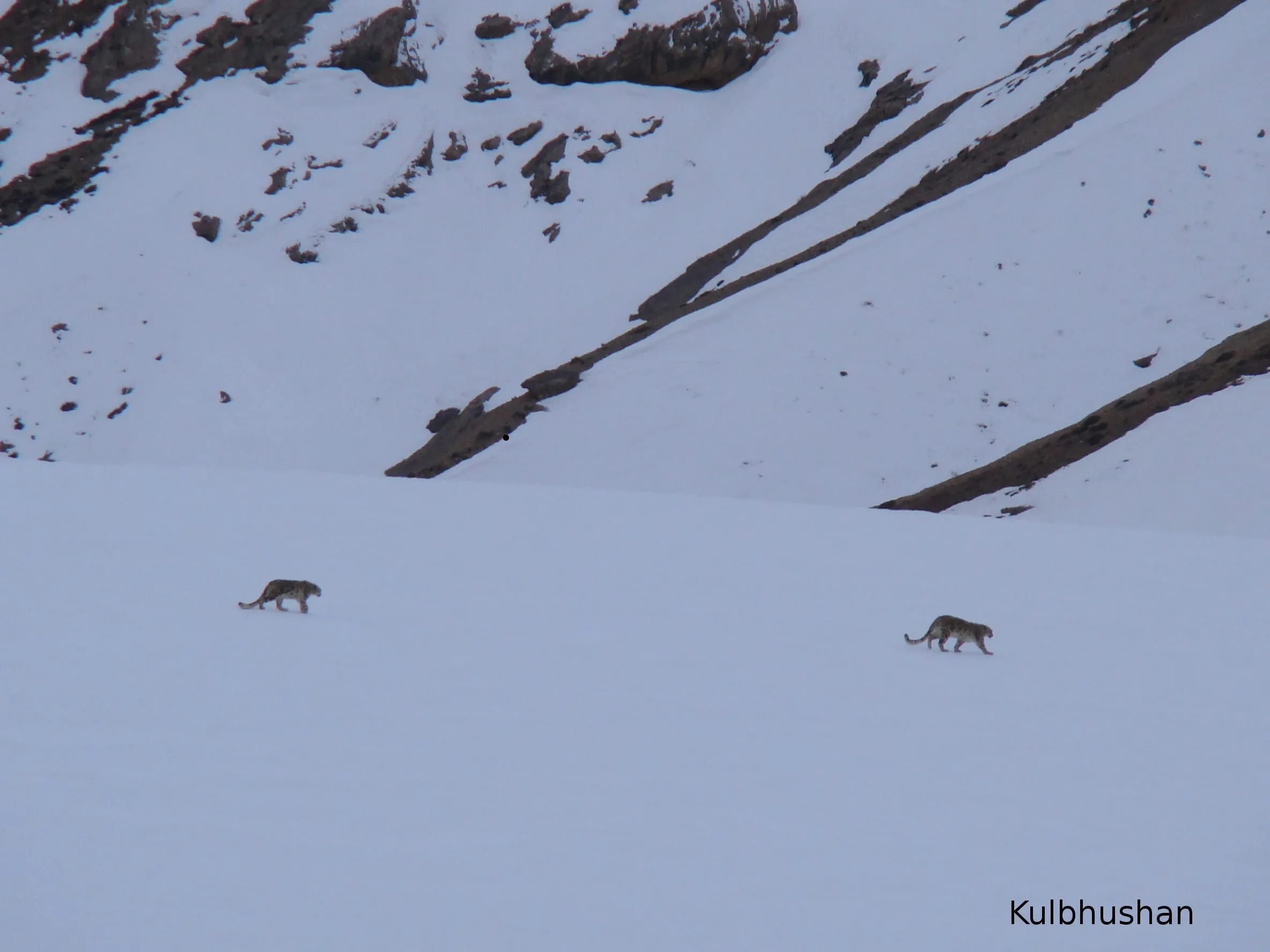
The best chance of seeing a snow leopard in Spiti is from January to March around Kibber, about 8 km above Key. Give it four to five days with a local spotter and a telescope. Himachal’s 2025 survey estimated 83 snow leopards in the state, with the highest densities in the Spiti and Pin valleys. No sighting is ever promised.
When to go
From about January to March. Heavy snow drives the blue sheep, the snow leopard’s main prey in Spiti, down to the lower slopes around Kibber, and the cats follow. February is often the best month. December can work, but the snow is thinner and the animals more spread out; by April they are moving back up.
It is very cold. In Kaza, January nights average about −18 °C and the coldest fall below −30 °C, and Kibber is 600 m higher. You will spend hours standing still on a ridge. See Spiti in winter for the road, the cold and what is open.
Where
Kibber is the centre of it. The village sits at about 4,270 m on the edge of Kibber Wildlife Sanctuary, above the gorges that run down towards Chicham. Spotters scan the cliffs from the road and the ridges with telescopes, and when one is found the word goes round the village. Researchers from the Nature Conservation Foundation have studied snow leopards here since the late 1990s, and the village’s homestays have hosted snow leopard visitors since the early 2010s.
Kibber is about 8 km above Key, so the villa makes a base too: a short drive up for the morning’s spotting.
How many there are
Himachal Pradesh has counted its snow leopards twice with camera traps. The first survey, in 2021, estimated 51 in the state. The second, released in October 2025, estimated 83 (likely between 67 and 103), excluding cubs, with the highest densities in the Spiti and Pin valleys. Both surveys photographed the same number of different cats, 44, so part of the rise comes from better methods rather than more animals.
How many days
Give it four to five days in Kibber, plus two days each way through Kinnaur from Shimla. Some visitors see a cat on the first morning; others spend a week and see only tracks and a kill. Mornings and late afternoons are best. In the middle of the day, visit Key Monastery, Langza if the road is clear, or simply warm up.
What else you may see
Blue sheep on almost every slope, often close to the road. Ibex on the cliffs, red foxes, and with luck a Himalayan wolf. In the sky: golden eagles, lammergeiers and Himalayan griffons.
What it costs
The biggest costs are the winter vehicle and driver from Shimla, the spotter, and the days you give it. The Himalayan Brothers Winter Spiti & Snow Leopard Trail starts from ₹32,999 per person for 7 days (twin sharing, four travellers sharing the vehicle), as listed on himalayanbrothers.com; the trip team quotes for your dates on WhatsApp. Specialist photography expeditions with long lenses and more spotting days cost more. See Spiti trip cost for the rest.
Doing it well
- Keep your distance. Never chase, bait or call an animal, and don’t fly drones. If a cat is on a kill, stay back and let it eat.
- Use local spotters and homestays. In Kibber, snow leopard tourism is run largely by the village, and it is part of why people here now protect the cats that sometimes take their livestock.
- Leave nothing behind. Waste from homestays rises sharply in winter, when there is no way to take it out. Carry yours back to Kaza.
- Respect the village. Ask before photographing people, and keep your voice down on the ridges.
What to bring
A down jacket rated well below freezing, insulated boots, thermal layers, a warm hat, two pairs of gloves (thin ones for the camera), sunglasses for the glare, and binoculars. Keep batteries warm inside your jacket; the cold drains them fast. The full list is on our packing list.
Staying near Kibber
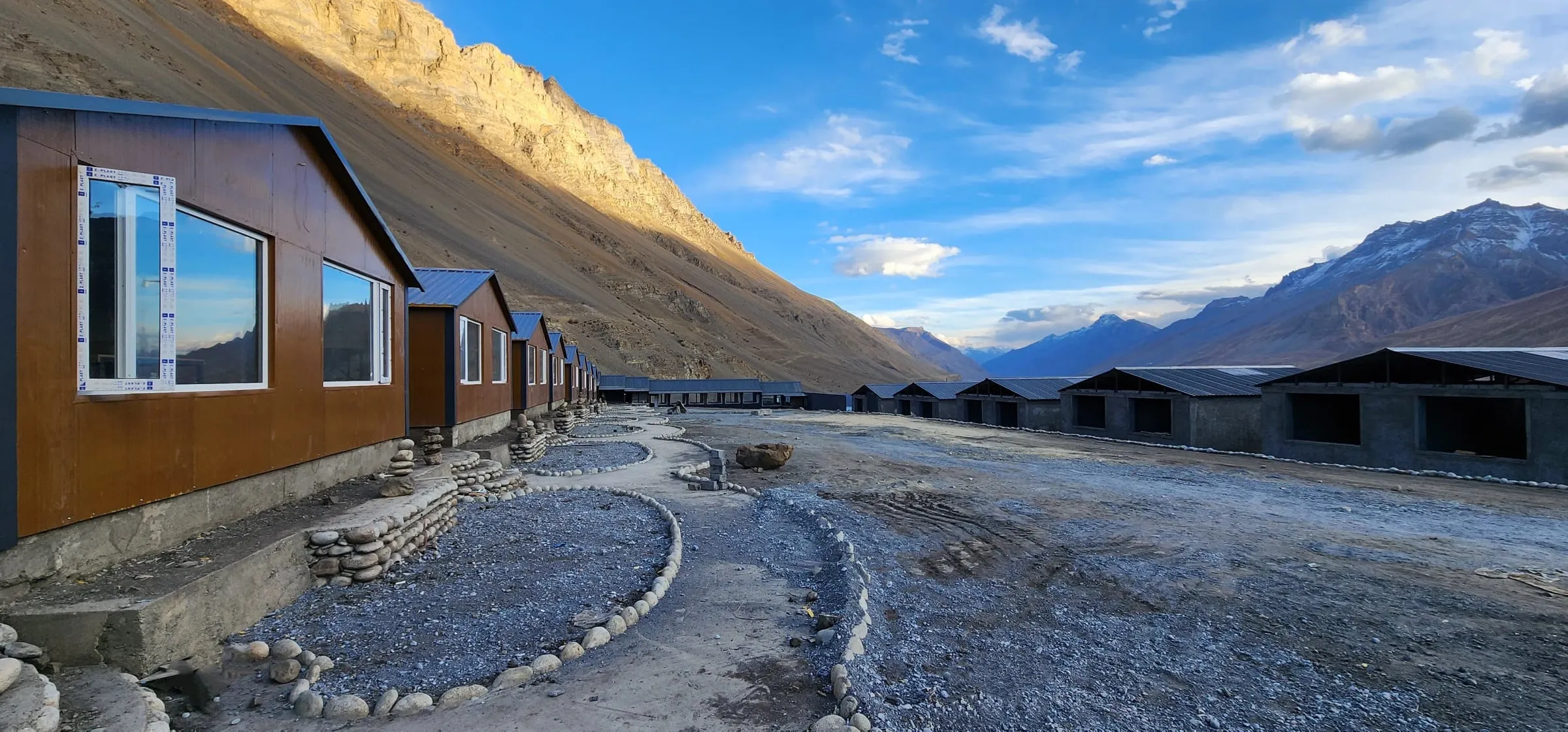
Spiti Villa is open all year, below Key Monastery and 8 km from Kibber, with room heaters, hot water, power backup and oxygen on site. Many visitors split the trip: a few nights in a Kibber homestay to be close to the spotters, and a few at the villa to warm up and see Key. See our winter itinerary and the snowfall guide.
Quick answers
When is the best time to see a snow leopard in Spiti?
January to March. Deep snow pushes the blue sheep down to lower slopes around Kibber, and the snow leopards follow them. February is often the best month. Outside winter, sightings are rare.
Where can you see snow leopards in Spiti?
Around Kibber and the gorges near Chicham, inside and around Kibber Wildlife Sanctuary. Local spotters watch the slopes from the road and the ridges, and the homestays in Kibber are the usual base.
How many snow leopards are there in Spiti?
Himachal Pradesh’s second state-wide survey, released in 2025, estimated 83 snow leopards in the state (likely between 67 and 103), with the highest densities in the Spiti and Pin valleys. The first survey, in 2021, estimated 51.
How many days do I need to see a snow leopard?
Plan four to five days around Kibber, on top of the two days’ drive in from Shimla. Some visitors see one on the first morning; others spend a week and see only tracks.
How much does a snow leopard trip in Spiti cost?
It depends on the days and the spotter. The Himalayan Brothers Winter Spiti & Snow Leopard Trail starts from ₹32,999 per person for 7 days, as listed on himalayanbrothers.com; specialist photography expeditions cost more. Ask for the price for your dates on WhatsApp.
Is a snow leopard sighting guaranteed?
No. Snow leopards are wild and very hard to see. A good spotter, patience and enough days raise your chances, but anyone who promises a sighting is not being honest.
Is it safe?
Snow leopards avoid people. The real risks are the cold, the altitude and the winter roads: Kibber is at about 4,270 m and nights fall below −20 °C. Come in slowly through Kinnaur, and dress for long hours standing still in the snow.
Sources
- 83 snow leopards recorded in Himachal, up from 51, Mongabay India, October 2025
- Population assessment of snow leopards completed in northern India state, Snow Leopard Trust, 10 February 2021: estimate of 51 (34–73) in Himachal Pradesh
- When the world comes for the snow leopard, Snow Leopard Trust, on tourism in Kibber
- Kibber: a hotspot for snow leopard lovers, Snow Leopard Trust
- Kibber Wildlife Sanctuary, Spiti Wildlife Division
- Winter Spiti & Snow Leopard Trail, Himalayan Brothers, from-price checked 18 November 2026
- Open-Meteo historical weather API (ERA5 reanalysis), Kaza, daily data 2001–2025, averages computed 14 November 2026
Trips that fit
Run by Himalayan Brothers, our family’s travel company, and quoted on WhatsApp.
From our door
Spiti Villa is on Kibber Village Road, just below Key Monastery and 12 km from Kaza: 32 rooms, a glass-walled restaurant, and oxygen on site if the altitude catches up with you. Open all year.