
Monasteries in Spiti Valley
Spiti is one of the great Tibetan Buddhist valleys of India. Its best-known monasteries are Key, the largest; Tabo, founded in 996 CE and the oldest; Dhankar, on its cliff; and Tangyud at Komic, the highest, at about 4,520 m. Most belong to the Gelug school, with Sakya gompas at Komic and Kaza and the Nyingma gompa of Kungri in Pin Valley.
The monasteries at a glance
| Monastery | School | Founded | Altitude | From Kaza | From Spiti Villa |
|---|---|---|---|---|---|
| Key Monastery | Gelug | 11th century (by tradition) | About 4,166 m | About 12–14 km | About 4 km by road |
| Tabo Monastery | Gelug | 996 CE | About 3,050 m | About 48 km | About 60 km |
| Dhankar Monastery | Gelug | By the 12th century | About 3,894 m | About 30 km | About 42 km |
| Tangyud Monastery, Komic | Sakya | Early 14th century (present building) | About 4,520 m | About 16–19 km | About 22–26 km |
| Kungri Monastery | Nyingma | About 1330 | About 3,500–3,800 m | About 35 km | About 47 km |
| Lhalung Monastery | Gelug | Late 10th century | About 3,660 m (village) | About 33 km | About 45 km |
| Kaza Monastery | Sakya | 2009 (new building) | About 3,650 m | In town | About 12 km |
| Gue (the mummy) | – | About 500 years ago (the monk) | About 3,600 m | About 82 km | About 94 km |
| Nako Monastery | – | Dated to 1025 AD | About 3,625 m | About 110 km | About 122 km |
Road distances from OpenStreetMap, rounded. The highest is Tangyud Monastery, Komic, at about 4,520 m.
Each monastery
-
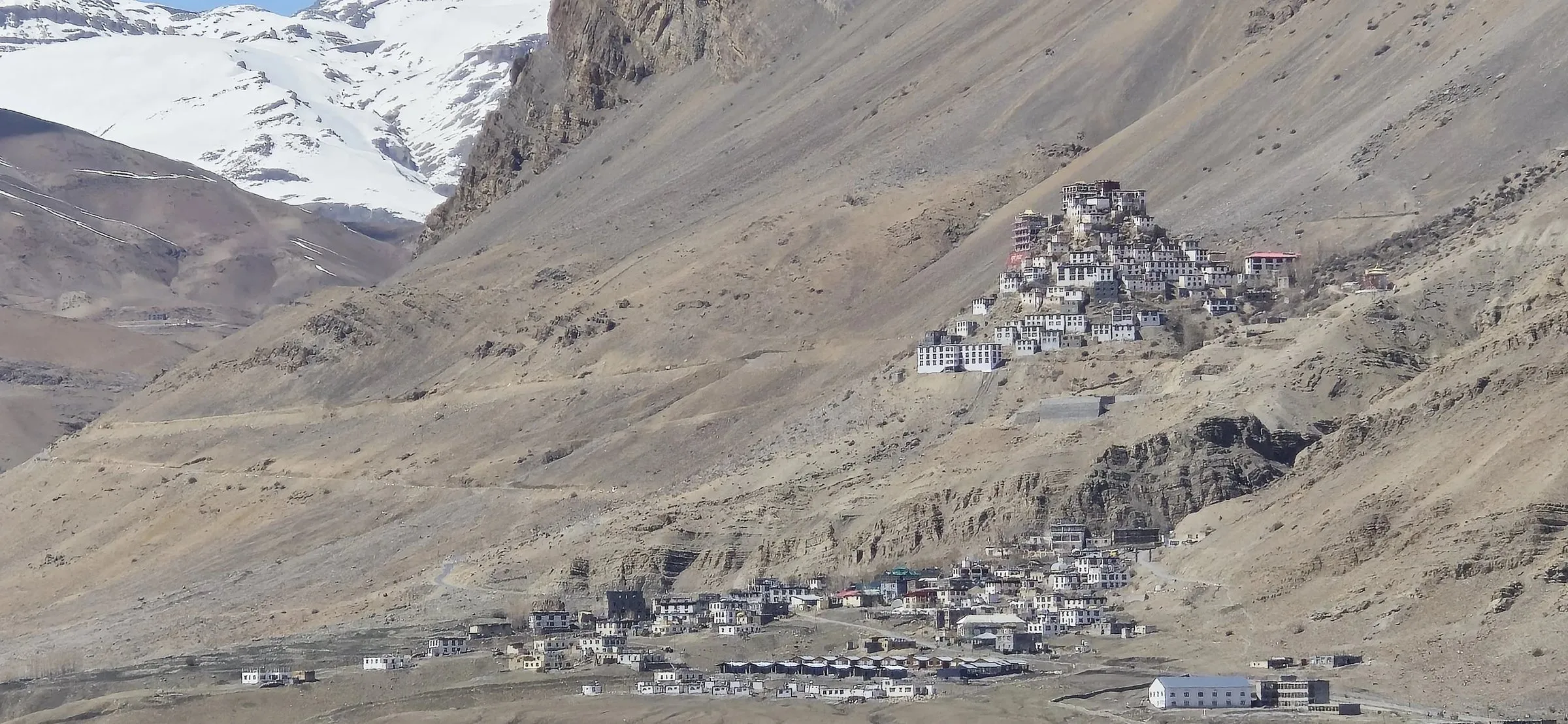
Key Monastery 4,166 m
The largest monastery in Spiti, of the Gelugpa school. Spiti Villa sits just below it.
-
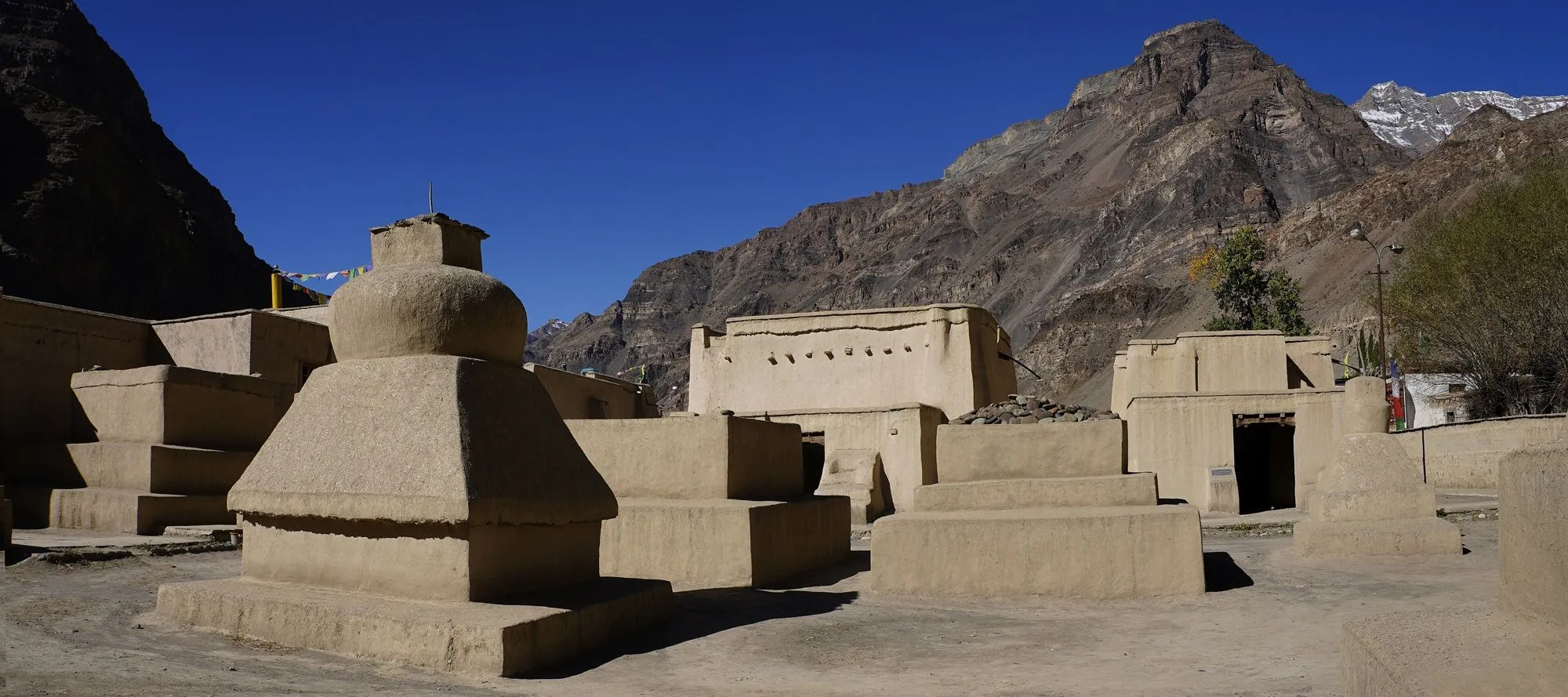 Tabo Monastery 3,050 m
Founded in 996 CE: mud halls, old murals and caves in the cliff above.
-
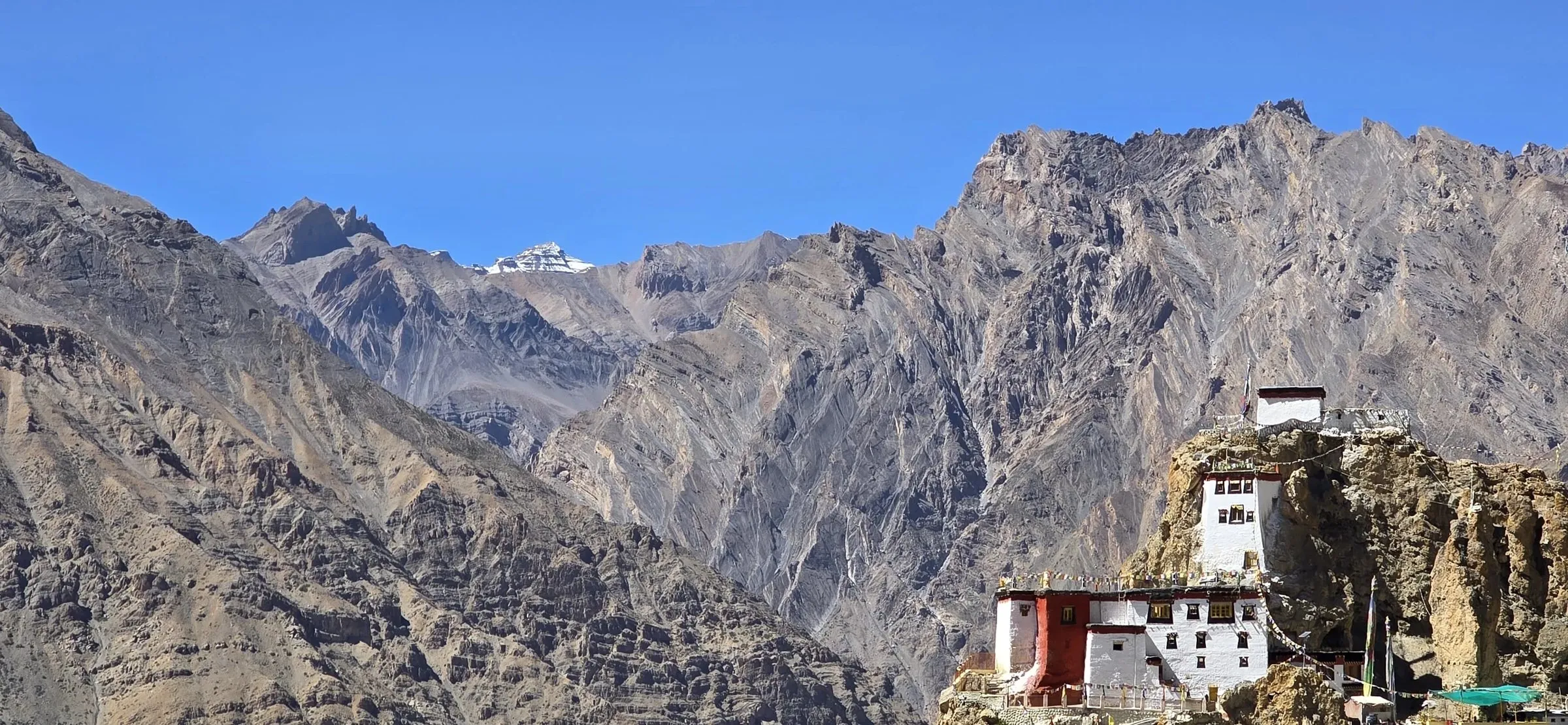 Dhankar Monastery 3,894 m
A cliff-top gompa where the Spiti and Pin rivers meet. Once Spiti’s capital.
-
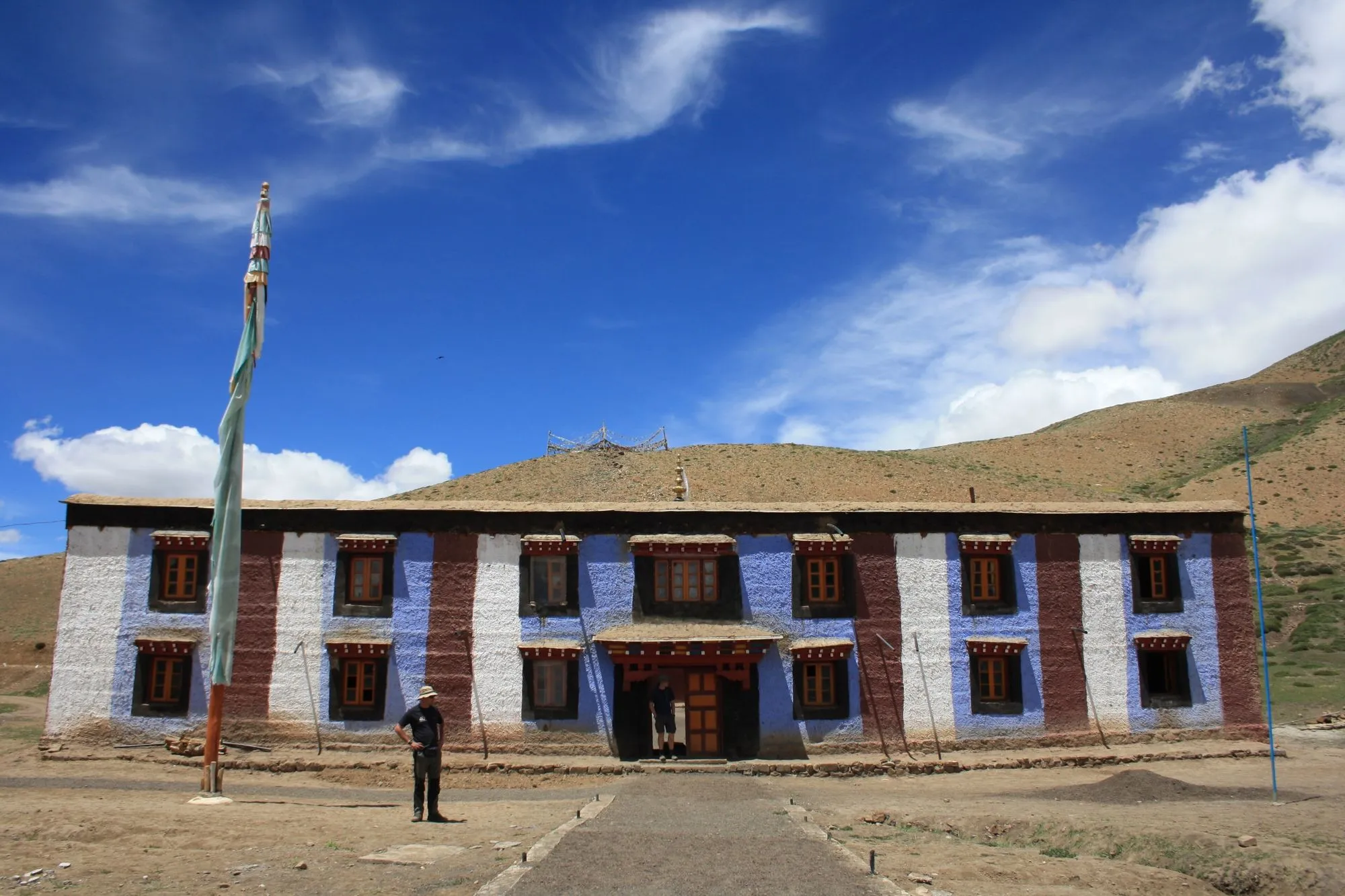 Tangyud Monastery, Komic 4,520 m
Tangyud Monastery at about 4,520 m, one of the highest villages you can drive to.
-
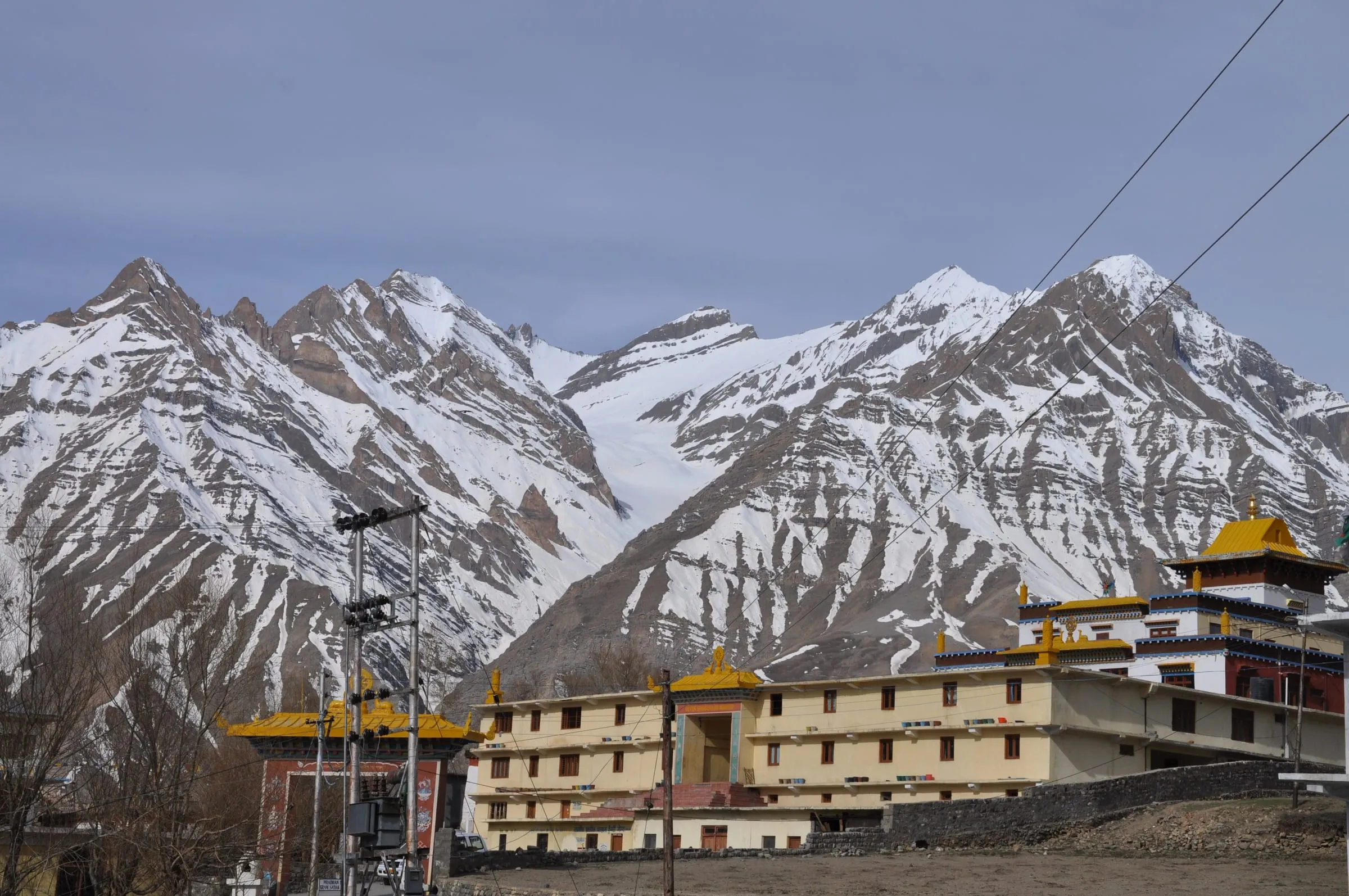 Kungri Monastery 3,500–3,800 m
Pin Valley’s Nyingma gompa, from about 1330, with painted protector deities.
-
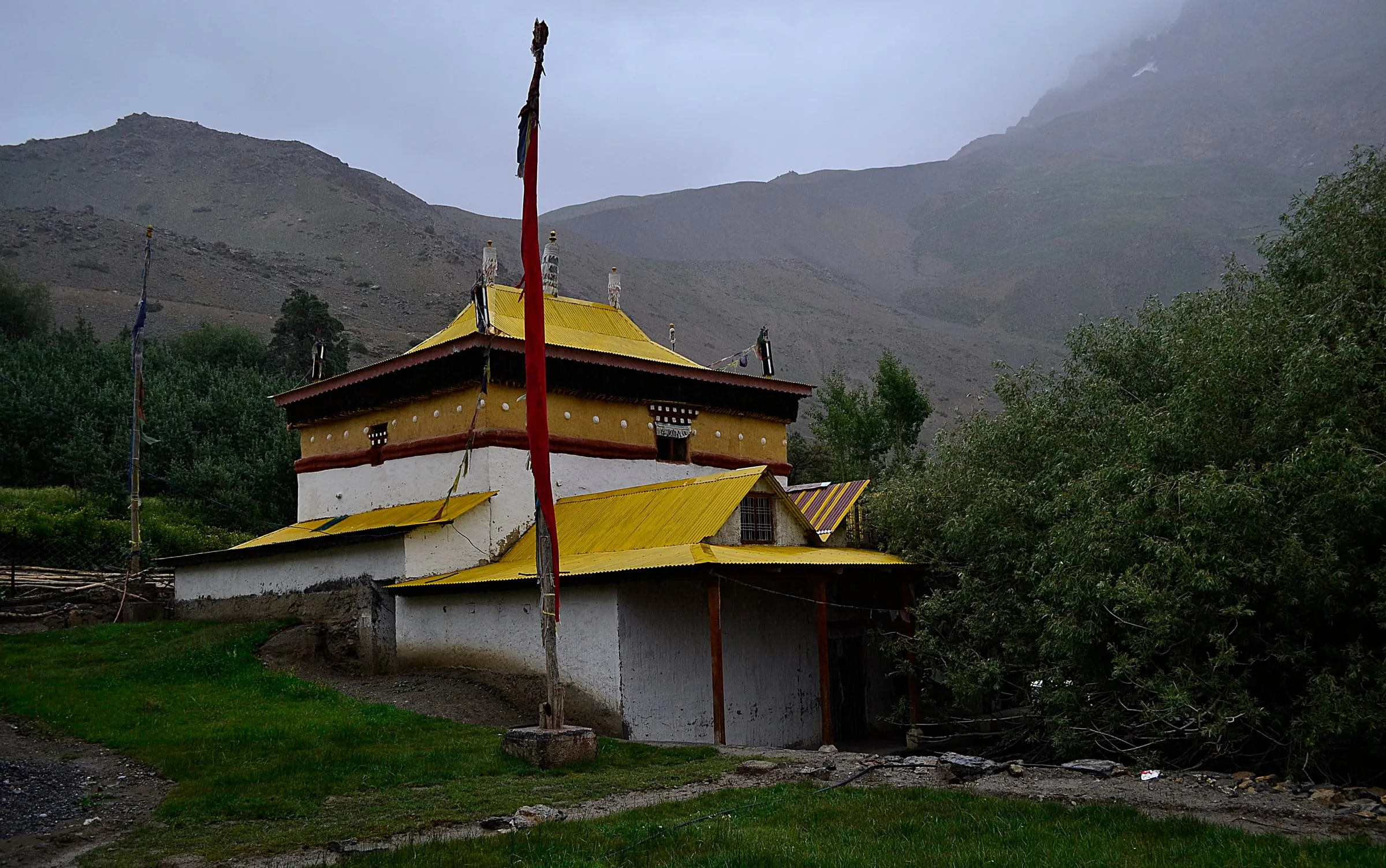 Lhalung Monastery 3,660 m (village)
A temple from the time of Rinchen Zangpo, in a quiet side valley near Dhankar.
-
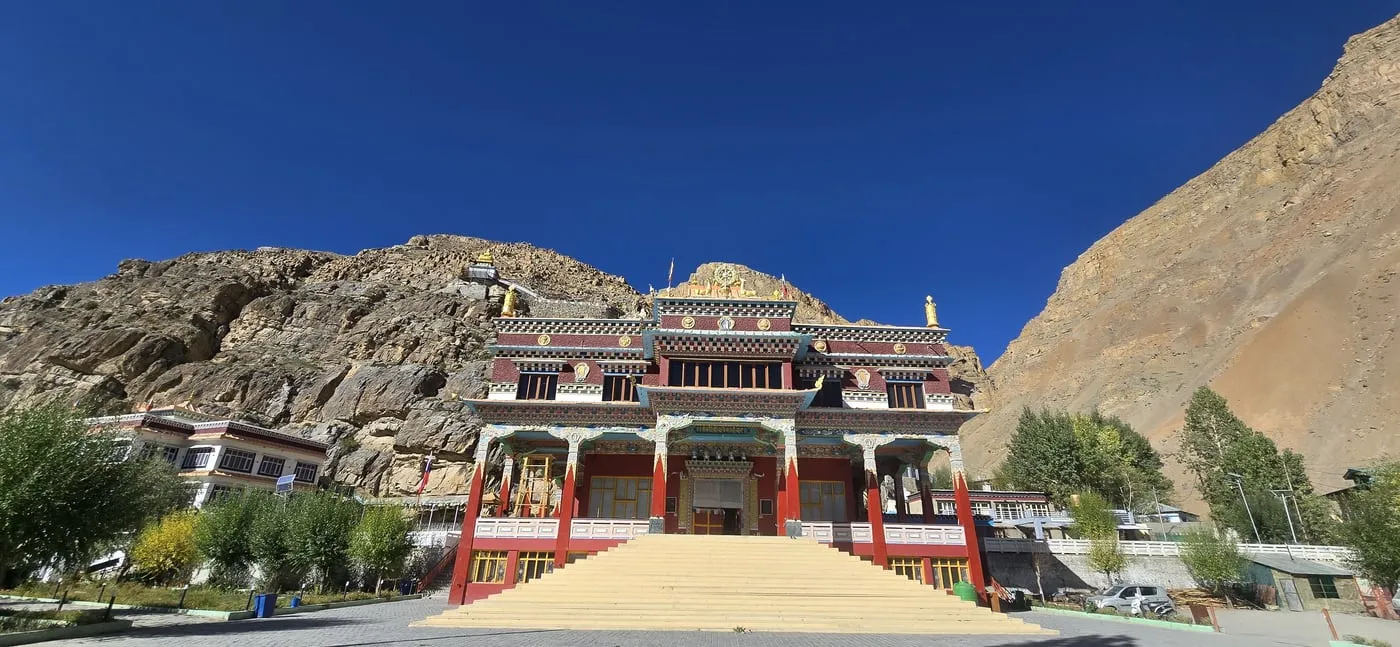 Kaza Monastery 3,650 m
The colourful Sakya gompa in Kaza, opened by the Dalai Lama in 2009.
-
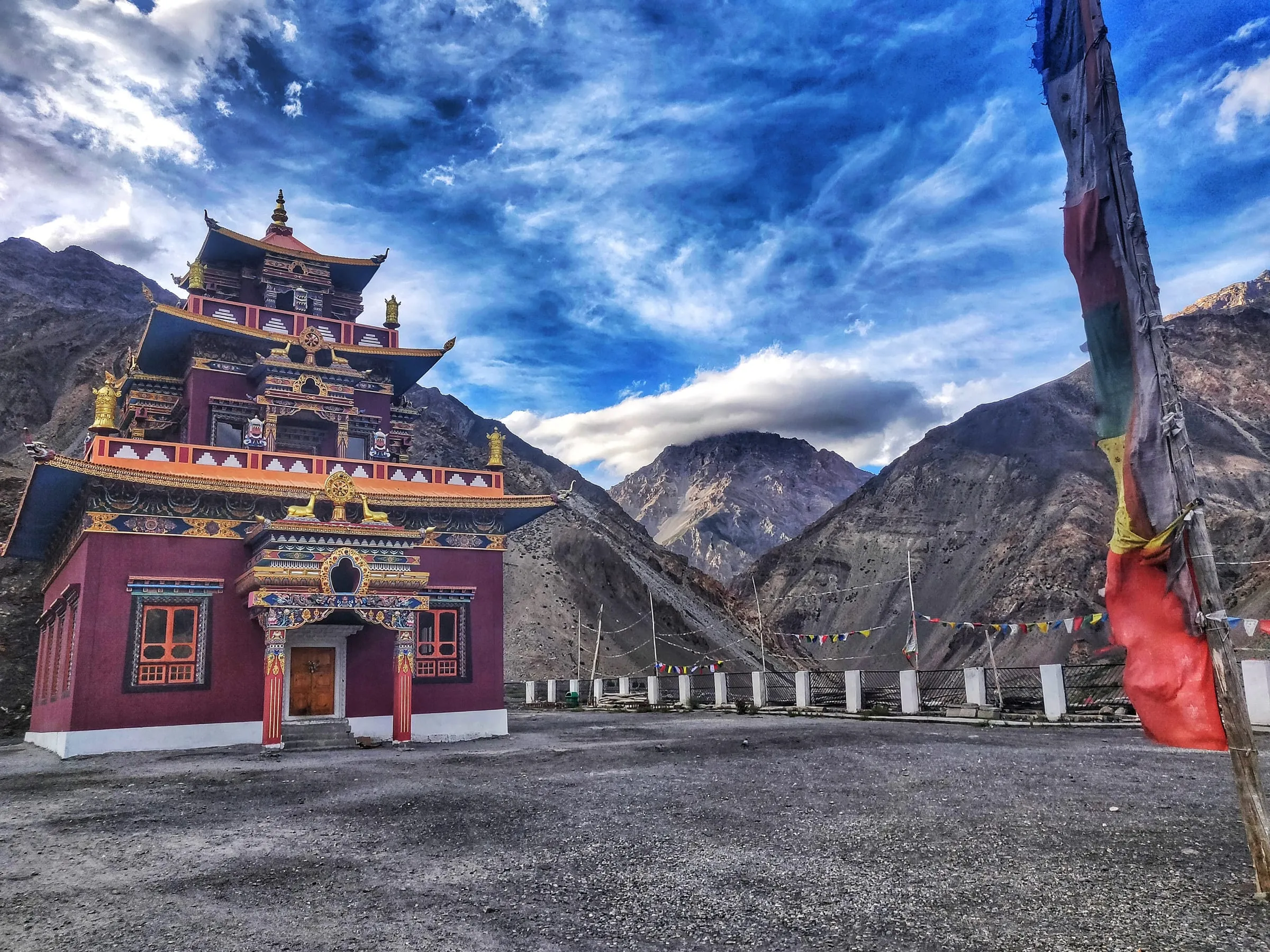 Gue (the mummy) 3,600 m
A monk preserved in meditation for about 500 years, near the Tibet border.
-
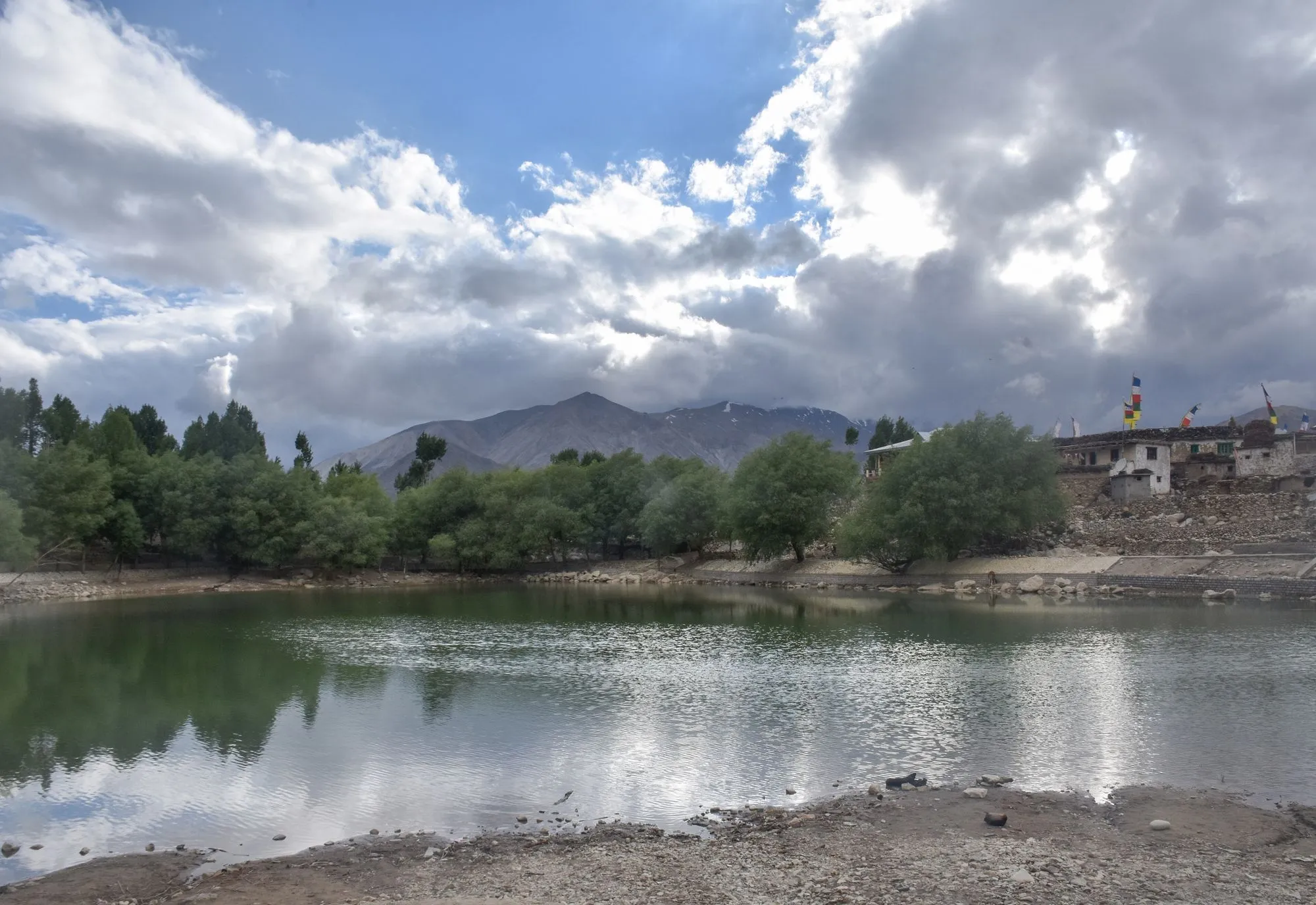 Nako Monastery 3,625 m
A lake and an old monastery in upper Kinnaur, the classic night before Spiti.
A thousand years of Buddhism in Spiti
Buddhism came to Spiti in force at the end of the 10th century, with the translator Rinchen Zangpo (958–1055). Working for Yeshe-Ö, king of Guge in western Tibet, he founded Tabo in 996 CE, and the temple at Lhalung is linked to him too. Lhalung and the first temple at Komic began as houses of the Kadampa tradition, founded by Atisha’s pupil Dromtön.
In the 14th century the Sakya school rose to power with Mongol support, and the fortified Tangyud Monastery at Komic was probably built then. The Nyingma gompa of Kungri in Pin Valley dates from about 1330. In the 17th century, under the Fifth Dalai Lama, Mongol forces brought most of the valley’s monasteries into the Gelug school, plundering Key on the way. Spiti’s capital in that century was Dhankar, a fort monastery on a cliff.
Wars between Ladakh and Kullu, the Dogra army in 1841, fires and the 1975 earthquake damaged the gompas again and again, and each time they were rebuilt. The newest, the Sakya monastery in Kaza, was inaugurated by the 14th Dalai Lama in 2009.
The schools you’ll meet
Gelug
The school of the Dalai Lama, and the largest in Spiti: Key, Tabo and Dhankar, and Lhalung since the 17th century.
Sakya
Two monasteries left in Spiti: Tangyud at Komic, the highest, and its winter home, the new gompa in Kaza.
Nyingma
The oldest school. Its main gompa in Spiti is Kungri, in Pin Valley, painted with fierce protector deities.
Visiting a monastery
- Walk clockwise around chapels, stupas, prayer wheels and the monastery itself.
- Take your shoes off where you are asked to, and cover your shoulders and knees.
- Ask before taking photos indoors. Many halls don’t allow it, Tabo’s old halls among them.
- Don’t point your feet at images or monks, and don’t touch the murals: some are a thousand years old.
- Leave a donation, especially if a monk shows you round or you are offered tea.
- Come early. Prayers start in the morning (at Tabo the daily chanting begins at about 6 am), and at Key you can usually sit quietly at the back. Halls are generally open through the day until late afternoon; if one is locked, ask a monk.
Festivals and masked dances
Each big gompa has its own festival days, set by the Tibetan calendar, so the dates move every year. Key holds its masked Chham dances once a year in summer, often in July. Tabo holds the Chakhar festival every three years, usually in September or October, and the Dalai Lama gave Kalachakra teachings there in 1983 and 1996. In Pin Valley, the Buchen performers of Mudh are known for a sword dance linked to Kungri. Ask locally, or ask us, for the dates in the year you travel.
Seeing them in three days
- Key and the high villages. Key for the morning prayers, then Kibber; in the afternoon, Langza, Hikkim and Tangyud at Komic. Finish at the Kaza gompa.
- Down the valley. Dhankar on its cliff, Lhalung about 13 km away in the Lingti valley, and Tabo.
- Pin Valley. Kungri, then on to Mudh at the end of the road.
Coming in from Shimla, see Nako and the Gue mummy on the way, and sleep at Tabo. The family’s Spiti from Kaza trip covers the main monasteries and villages, with a local driver.
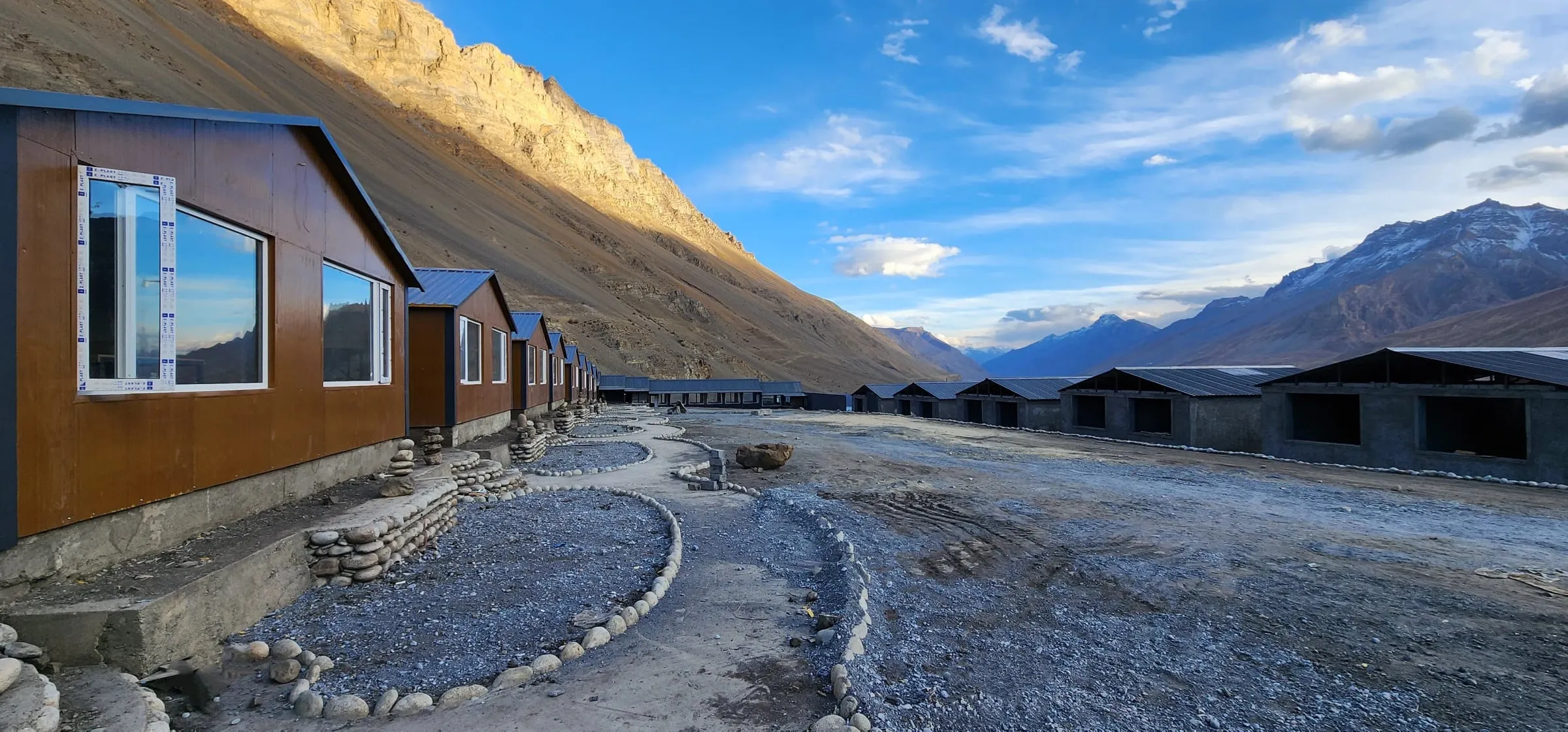
Wake up below Key Monastery
Spiti Villa is on Kibber Village Road, just below Key Monastery and 12 km from Kaza: 32 rooms, a glass-walled restaurant, and oxygen on site if the altitude catches up with you. Open all year.
Quick answers
Which is the oldest monastery in Spiti?
Tabo, founded in 996 CE by the translator Rinchen Zangpo. It is the oldest Buddhist enclave in continuous use in India and the Himalayas. Lhalung, also linked to Rinchen Zangpo, dates from the same late 10th century, but only one of its old temples survives.
Which is the highest monastery in Spiti?
Tangyud Monastery at Komic, at about 4,520 m, one of the highest monasteries in India. Key Monastery stands at about 4,166 m.
Which is the largest monastery in Spiti?
Key Monastery, a Gelug gompa on a cone-shaped hill about 12–14 km from Kaza. It is also a training centre for young monks.
How many days do I need to see the monasteries of Spiti?
Three days from a base near Kaza: one for Key, Kibber and the high villages with Tangyud; one down the valley for Dhankar, Lhalung and Tabo; one for Pin Valley and Kungri. Add Gue on the day you drive in from Kinnaur.
Is there an entry fee for Spiti’s monasteries?
Key Monastery charges no entry fee, and most village gompas don’t either. A donation is welcome, especially if a monk shows you round or you are given tea.
Can you visit the monasteries in winter?
The ones on the main roads, yes: Kaza, Key (when the road up is clear), Tabo and Dhankar. Spiti is reached only through Kinnaur in winter, and the high villages depend on the snow that week. Spiti Villa, below Key Monastery, is open all year.
Sources
- Key Monastery, Wikipedia, checked 18 November 2026
- Tabo Monastery, Wikipedia, checked 18 November 2026
- Dhankar Gompa, Wikipedia, checked 18 November 2026
- Tangyud Monastery, Wikipedia, checked 18 November 2026
- Kungri Monastery, Wikipedia, checked 18 November 2026
- Lhalung Monastery, Wikipedia, checked 18 November 2026
- Sangha Tenzin (the Gue mummy), Wikipedia, checked 18 November 2026
- H.H. the Dalai Lama blesses new Sakya monastery in Kaza, July 2009
- Key Monastery, Spiti: how to reach, timings and where to stay, Himalayan Brothers, October 2026
- Road distances from OpenStreetMap, routed with OSRM, checked 18 November 2026