
Spiti in winter
The short answer
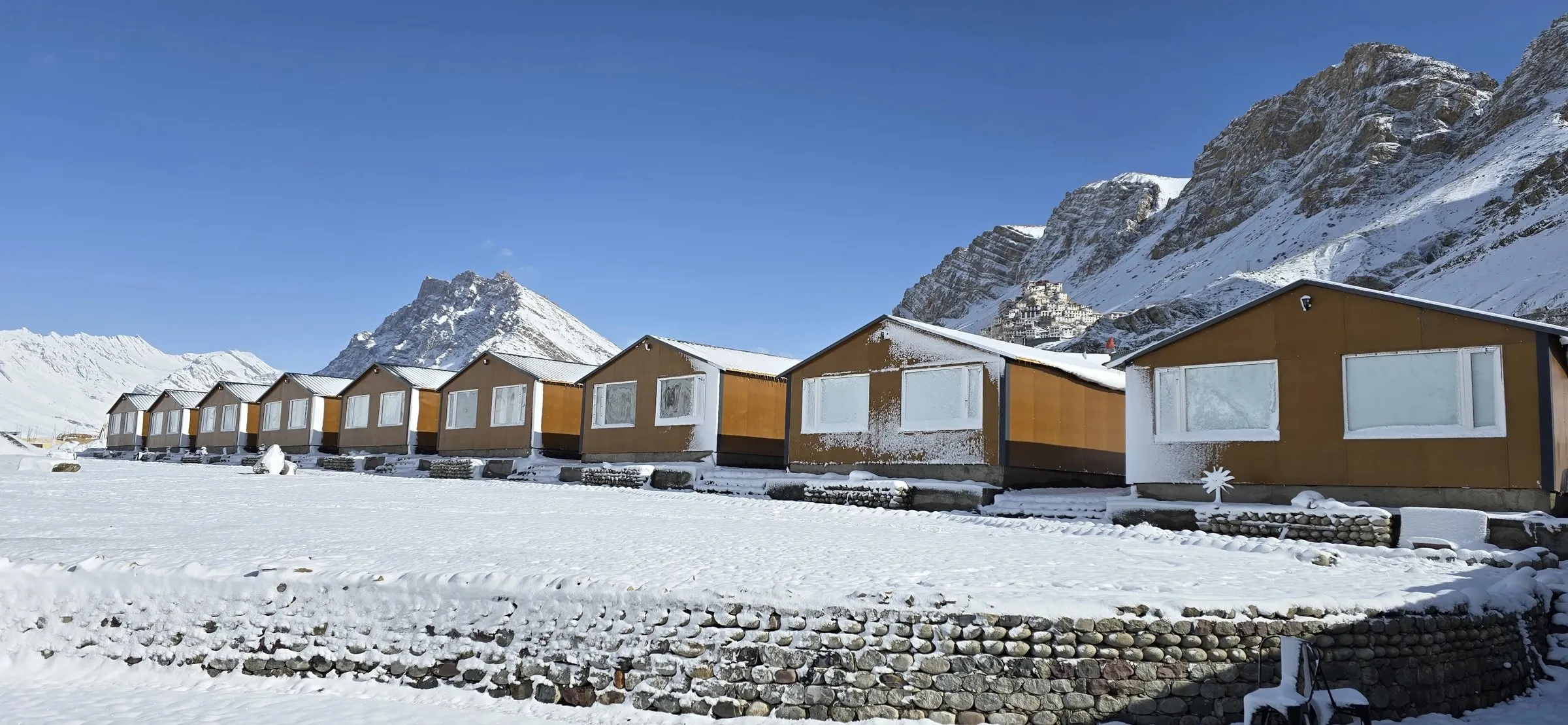
In winter, roughly December to March, Spiti is reached only from Shimla through Kinnaur; the Manali road over Kunzum and Chandratal are closed. Nights in Kaza average about −14 °C to −18 °C and can fall below −30 °C. The main monasteries and some homestays stay open, and January to March is the season for snow leopards around Kibber.
The one road in
From about November to late May or June, Kunzum Pass is closed and so is Chandratal. The only way into Spiti is from Shimla through Kinnaur: about 420 km to Kaza, through Rampur, Reckong Peo and Nako, to Tabo and Kaza. The Border Roads Organisation keeps it open and clears it after snowfall, but it does shut: a landslide at Maling Nala near Nako, or a heavy dump of snow, can close it for a day or for several. Keep spare days, and check whether Spiti is open before you set out.
Come by 4×4 with snow chains, and with a driver who knows the road in winter. Never drive after dark: black ice and unlit trucks are a bad mix.
How cold it gets
Monthly averages for Kaza, from ERA5 reanalysis data for 2001–2025:
| Month | Day | Night | Coldest night | Fresh snow |
|---|---|---|---|---|
| December | −6 °C | −18 °C | −37 °C | ~27 cm |
| January | −9 °C | −18 °C | −33 °C | ~59 cm |
| February | −8 °C | −16 °C | −31 °C | ~70 cm |
| March | −5 °C | −14 °C | −30 °C | ~56 cm |
The model smooths the valley: in the sun at midday it often feels nearer 0 °C, and the cold arrives the moment the sun goes behind the ridge. See the live Spiti weather.
What is open, and what isn’t
Open:
- Key Monastery, the Kaza gompa, Dhankar and Tabo. Monks live there all year, and with no tourist buses the visits are something else.
- Homestays in Kibber, Langza, Key and Kaza: fewer than in summer, so book ahead and confirm a few days before.
- Spiti Villa in Key, open all year.
- The Langza Buddha, when the road up is clear, often by mid-morning.
- Petrol in Kaza, and ATMs that can be empty or offline. Bring cash.
Closed or difficult:
- Running water. Pipes freeze. Most homes switch to dry toilets and bring hot water by the bucket.
- Power. It cuts out after heavy snow. Keep a power bank warm, inside your sleeping bag at night.
- Phone signal. Usually fine in Kaza, patchy or gone in the villages.
- Cafés. Most close for the season; you eat what your host cooks.
- Chandratal, Kunzum and the Manali road, until about June.
Snow leopards
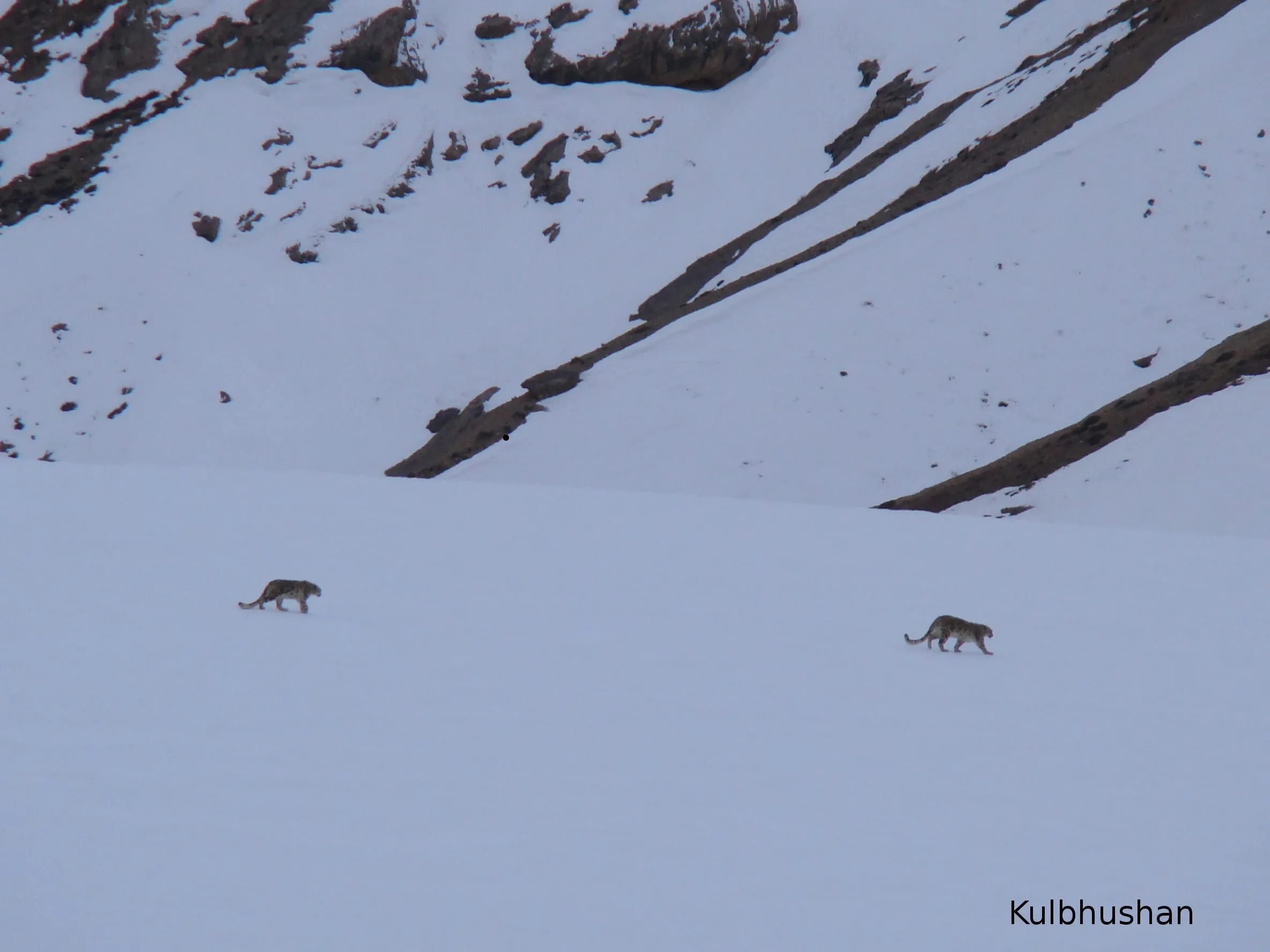
From about January to March, deep snow drives the blue sheep down the slopes around Kibber, and the snow leopards follow them. Kibber Wildlife Sanctuary is one of the best places in India to look for them. Give it several days, go with a good local spotter and a telescope, and keep your distance: nothing is promised, and the animals come first. You may also see blue sheep, ibex, red foxes and, with luck, a Himalayan wolf.
Which month?
- December: deep winter settles in, and the first heavy snow usually comes mid to late month.
- January: the hardest month: the coldest nights and the most road closures.
- February: still deep winter, but longer days, and one of the best months for snow leopards.
- March: the gentlest. The month the family suggests for a first winter trip.
Plan it
- Day by day: our 8-day winter itinerary, in and out from Shimla through Kinnaur.
- Snow: snowfall in Spiti, month by month, and where to see it.
- Snow leopards: how to look for them around Kibber, how many days, and what it costs.
- Christmas and New Year: what late December in Spiti is like.
- Night skies: stargazing in Spiti, with the new-moon dates.
- No car? One HRTC bus a day usually runs between Reckong Peo and Kaza in winter, when the road allows, though it can be suspended in late January and February: see Spiti by bus.
What to bring
A down jacket and thermal layers, a warm hat and gloves (with liners), insulated boots with good grip, sunglasses and sun cream (the snow glare is fierce), a power bank, a head torch, lip balm, and any medicines you need: the nearest big hospital is a long drive away. Read the safety guide on the cold and the altitude.
Staying warm in Key
Spiti Villa stays open all year, just below Key Monastery, with room heaters and hot water in winter, and power backup and oxygen on site. Wake up to the monastery under fresh snow, then drive to Kibber for the morning’s spotting. Book on WhatsApp, and call ahead about the road up from Kaza. The family’s Winter Spiti & Snow Leopard Trail and Winter Spiti from Chandigarh handle the driving. For a first-hand account of a family winter, read Spiti Valley in winter on himalayanbrothers.com.
Every month in detail:
Quick answers
Is Spiti open in winter?
Yes, through Kinnaur from Shimla. The Border Roads Organisation clears that road after snowfall, but a landslide or heavy snow can close it for a day or several. The Manali side over Kunzum Pass is closed from about November to late May or June.
How cold is Spiti in winter?
In January, Kaza averages about −9 °C by day and −18 °C at night, and the coldest nights fall below −30 °C (ERA5 averages, 2001–2025). In the sun at midday it often feels nearer 0 °C.
Which is the best winter month for Spiti?
March for a first winter trip: snow on the ground, longer days, and nights easing to about −14 °C. January and February are colder but the best months for snow leopards.
Where can I stay in Spiti in winter?
Some homestays in Kaza, Key, Kibber and Langza stay open, and Spiti Villa in Key is open all year, with room heaters and hot water. Book ahead and confirm a few days before you arrive.
Can I see snow leopards in winter?
From about January to March, around Kibber, if you give it several days with a good spotter and a telescope. No sighting is ever promised.
Is winter Spiti worth it?
Yes, if you want snow, silence and the monasteries without crowds, and can take real cold. It is a slower, harder trip than summer: one road in, short days, and no Chandratal.
Is winter Spiti safe?
With planning, yes. Travel only in daylight, by 4×4 with snow chains and an experienced winter driver, come in slowly for the altitude, keep two spare days, and check the road each morning.
How many days do I need for winter Spiti?
At least 8 days from Shimla, plus two spare for closed roads. Add two or three days at Kibber for snow leopards. See our 8-day winter itinerary.
Which car is best for winter Spiti?
A 4×4 with good ground clearance, winter tyres and snow chains. A two-wheel-drive car or a bike is a bad idea on snow and black ice. Most people hire a local driver who knows the Kinnaur road in winter.
Can I drive myself to Spiti in winter?
Only with real snow-driving experience, a 4×4 and snow chains. Most people hire a local driver. Never drive after dark, and keep spare days for closed roads.
Sources
- Spiti Valley in winter, Himalayan Brothers
- Open-Meteo historical weather API (ERA5 reanalysis), Kaza, daily data 2001–2025, averages computed 14 November 2026
- Kibber Wildlife Sanctuary, Spiti Wildlife Division
- How to reach Spiti Valley, Himalayan Brothers
- How to plan a trip to Spiti Valley in winter, Discover with Dheeraj, updated October 2026 (winter buses)
Trips that fit
Run by Himalayan Brothers, our family’s travel company, and quoted on WhatsApp.
From our door
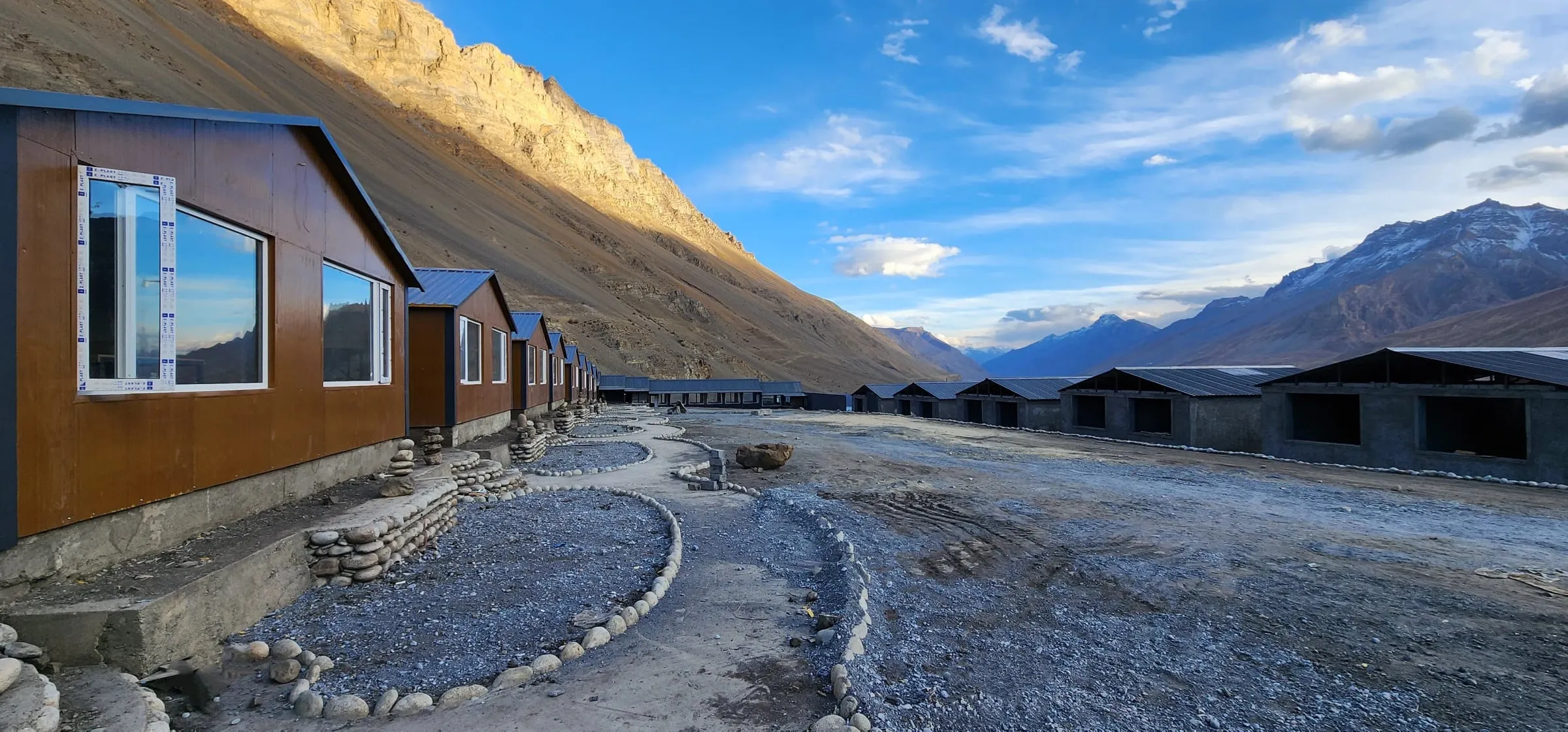
Spiti Villa is on Kibber Village Road, just below Key Monastery and 12 km from Kaza: 32 rooms, a glass-walled restaurant, and oxygen on site if the altitude catches up with you. Open all year.